Combination skin means an oily T-zone and dry or tight cheeks on the same face, and most face oils are built for one or the other. This guide breaks down what actually matters when picking a face oil for combination skin men, and which OLIRS options earn a spot in a real routine.
- All-In-One Facial Oil is the safe pick for combination skin men in 2026 — jojoba-led, six oils, cold-pressed. Buy.
- Nourishing Facial Oil's eleven-oil blend is too rich for a shiny T-zone — use it on cheeks only. Consider.
- Gentle Cleansing Milk pairs with either oil and carries the same cold-pressed, traceable sourcing. Buy.
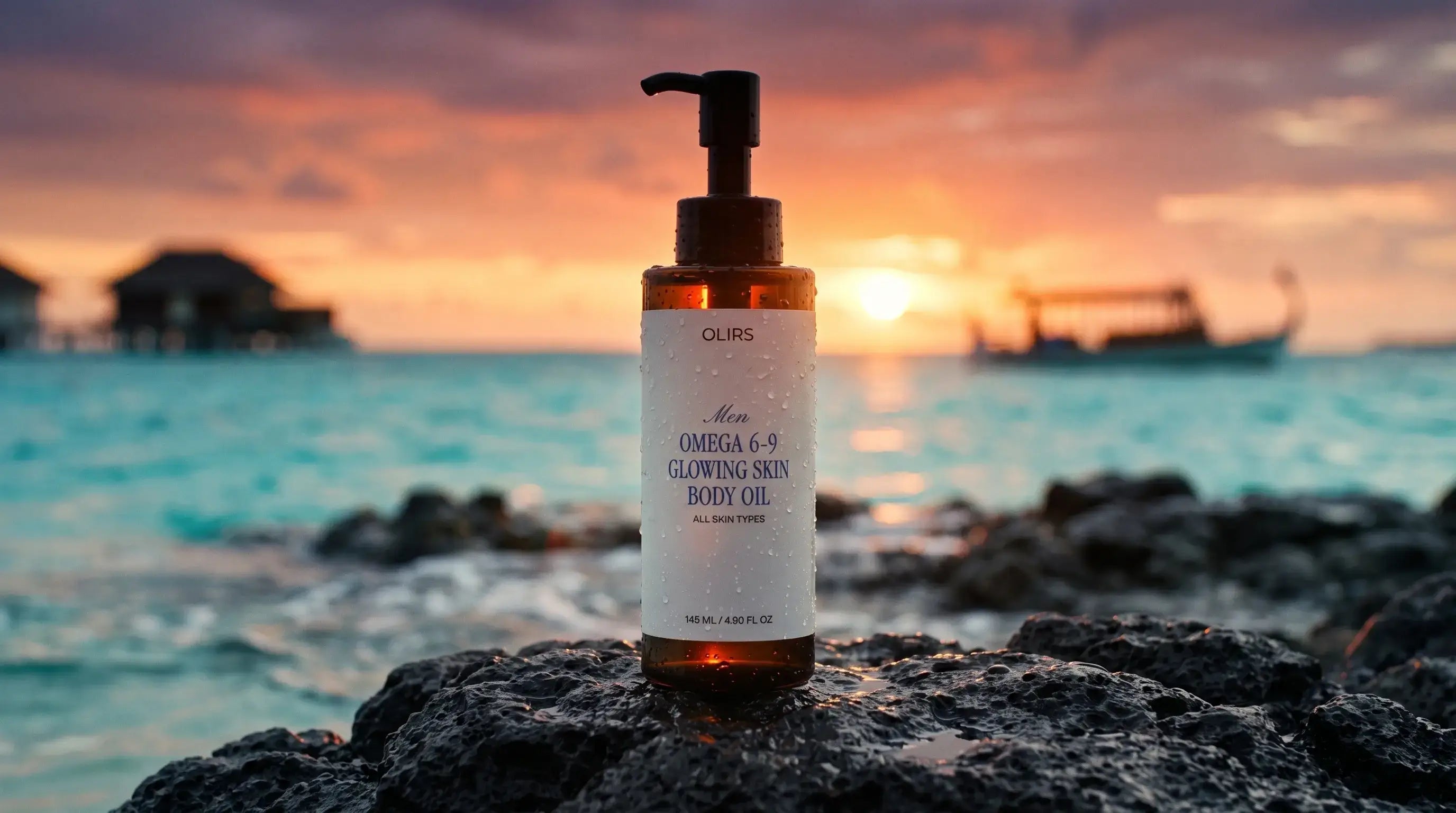
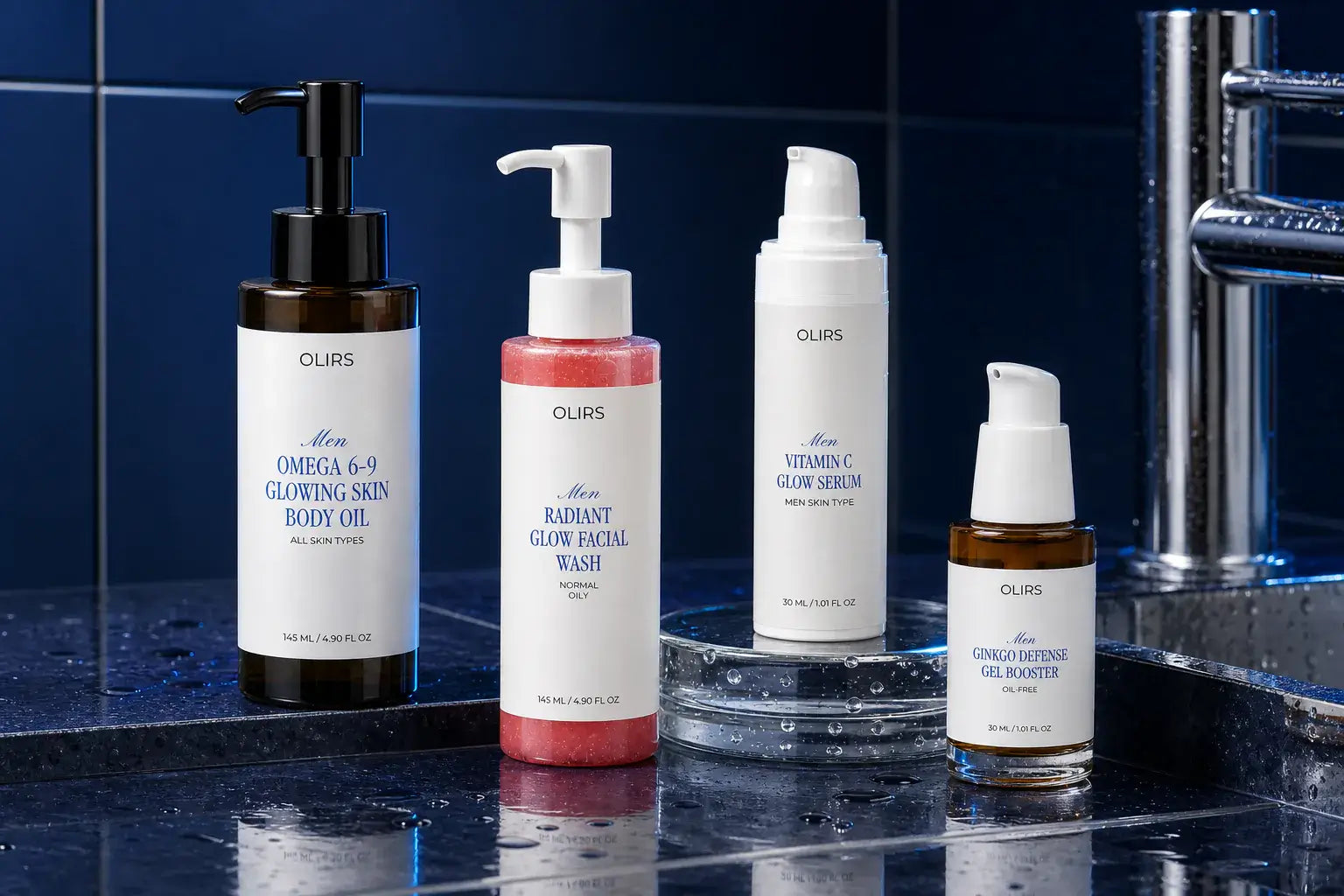
- Skip layering a body oil onto your face — Omega 6-9 Glowing Skin Body Oil is formulated for body skin, not pores.
Why this matters
Most face oil marketing skips the skin type it's actually for and just says "hydrating." Combination skin doesn't respond to that. Put a heavy 11-oil blend on a shiny nose and it slicks up by noon; put a light jojoba-based oil on dry, tight cheeks and it does nothing.
The fix isn't a magic ingredient. It's matching the oil's weight and absorption speed to the zone you're putting it on, and reading the label instead of the front-of-bottle claim. That's the whole approach behind the All-In-One Facial Oil, which leads with jojoba because jojoba's molecular structure sits close to the skin's own sebum and absorbs fast rather than sitting on top of it.
Who this is for
This guide is for men whose T-zone shines by early afternoon while their cheeks or jawline feel tight after washing — the guy who's tried a rich, heavy oil and regretted it by lunch, or skipped oil entirely because he assumed all face oil clogs pores. It's also for anyone building a two-step morning routine who wants one product that doesn't fight either half of his face.
What to look for in a face oil for combination skin
1. Cold-pressed extraction, stated plainly
Cold-pressing keeps an oil's fatty acid profile closer to its natural state — no heat-driven breakdown, no solvent residue to worry about. If a product won't say how the oil was extracted, that's information missing, not information you don't need. Look for the word "cold-pressed" on the product page itself, not just in reviews.
2. A jojoba-forward base, not a jojoba-adjacent one
Jojoba wax mimics human sebum closely enough that oily skin tolerates it without the heavy, occlusive feel of something like coconut oil. For combination skin, a jojoba-led formula absorbs into the T-zone instead of sitting on it, while still moving oil onto dry cheeks. A blend where jojoba is buried fifth or sixth on the ingredient list behaves differently than one where it's first.
3. A finish you can check in under a minute
Apply a small amount to the back of your hand. If it's still sitting on the surface after 60 seconds, it will sit on your T-zone the same way. A face oil built for combination skin should absorb close to fully within that window, leaving a slight matte-to-satin finish, not a sheen.
4. Certification that's actually checkable
COSMOS Natural certification means an outside body — Ecocert, in this case — audited every ingredient and how it was extracted. It's not a marketing badge; it's a paper trail you can request. That matters more in face oil than almost any other category, because oil blends are where brands hide filler carrier oils behind a headline active.
5. How it fits a two-step routine, not a five-step one
Combination skin doesn't need six products. A gel or milk cleanser plus one oil, applied while skin is still damp, covers most mornings. If a face oil's instructions require three other steps to "work," that's added friction for skin that's already balancing two different needs.
“Jojoba isn't the trendy oil. It's the boring one that works because it doesn't clog pores.”
The picks


All-In-One Facial Oil — the safe pick
Six cold-pressed oils — jojoba, rosehip, sea-buckthorn, raspberry, and avocado among them — built for skin that reads dry or normal, not oily. The jojoba base is why it works across a combination face: it settles into a shiny T-zone without adding shine, and still moves enough fatty acids into dry cheeks to matter. It's also one of two OLIRS products in 2026 that can back the From Farm To Face slogan with a real origin trail: Mediterranean-basin jojoba, Carpathian rosehip, Himalayan sea-buckthorn, all cold-pressed. Verdict: Buy.
Nourishing Facial Oil — the rich pick, cheeks only
Eleven cold-pressed oils, still jojoba-led, but noticeably heavier than the All-In-One formula. For combination skin, that weight is an asset on dry cheeks and jawline and a liability on an already-shiny nose and forehead. Apply it only where skin feels tight, and keep the T-zone for a lighter formula or none at all. Verdict: Consider — dry zones only, not for the full face.
Gentle Cleansing Milk — the routine partner
A face oil is only as good as what comes before it. Gentle Cleansing Milk is the other product on the current catalog with a full sourcing trail — shea from the Sahel region, argan from a UNESCO biosphere reserve in Morocco, jojoba from the Mediterranean, all cold-pressed. It cleans without stripping, which matters because a stripped face makes any oil feel heavier than it is. Verdict: Buy.
What to avoid
- Body oil on your face. Omega 6-9 Glowing Skin Body Oil is formulated for body skin, which has fewer, larger pores than facial skin. Putting a body-weight oil on a combination face is the fastest way to end up shiny by 10am.
- Any oil that lists a "proprietary blend" instead of named oils. If you can't read what's in it, you can't check whether it's jojoba-led or something heavier dressed up with a marketing name.
- Skipping the cleanse step. Applying oil over unwashed skin traps the oil already on your face from the day before, which reads as clogged pores regardless of what you just put on top of it. For more on why the wrong oil makes tired-looking skin worse, see this breakdown on face oil for dull, tired-looking skin.
Verdict at a glance
| Product | Oil count | Best zone | Verdict |
|---|---|---|---|
| All-In-One Facial Oil | 6 cold-pressed oils | Full face, combination-safe | Buy |
| Nourishing Facial Oil | 11 cold-pressed oils | Dry cheeks and jawline only | Consider |
| Gentle Cleansing Milk | Shea, argan, jojoba | Pre-oil cleanse step | Buy |
| Body oil on the face | N/A | Never | Skip |
FAQ
What's the best face oil for combination skin men in 2026?
A jojoba-led, cold-pressed formula absorbs fast enough for an oily T-zone while still hydrating dry cheeks. All-In-One Facial Oil is built on that structure, with six named oils and no filler carrier.
Can men with combination skin use face oil on the T-zone?
Yes, if the oil is light and jojoba-forward. A heavier 11-oil blend like Nourishing Facial Oil is better reserved for dry cheeks, not the shiny center of the face.
Is face oil better than moisturizer for combination skin?
They're not interchangeable. A moisturizer adds water-based hydration; a face oil seals it in and softens dry patches. Combination skin often does best pairing a light gel or milk cleanser with a single well-matched oil rather than choosing one over the other.
Will face oil make an oily T-zone worse?
Only if the oil is heavy or diluted with cheap carrier oils. A jojoba-led, cold-pressed oil mimics the skin's own sebum and tends to reduce visible shine over time rather than add to it.
How much does a face oil for combination skin cost?
On the current OLIRS catalog, face oils run from about €36.40 to €40.40 depending on the oil count and formula. Check the site for current pricing before buying.
What does COSMOS Natural certification actually mean?
It means an outside body, Ecocert, audited every ingredient in the formula and how it was extracted. It's not a self-declared claim — it's a certification a brand can lose if the formula changes without re-audit.
Do I need to wash my face before applying face oil?
Yes. Oil applied over unwashed skin traps the previous day's buildup underneath it, which shows up as clogged pores regardless of how light the oil itself is.
Can I use the same face oil year-round?
Combination skin often needs less oil in humid months and slightly more in dry ones. Keep the same jojoba-led formula and just adjust how much you apply rather than switching products every season.
One last thing
Only two products in the current OLIRS catalog can trace their oils to a specific region and pressing method: All-In-One Facial Oil and Gentle Cleansing Milk. Everything else on the site is a solid formula without that sourcing paper trail yet — which is worth knowing before you assume a slogan applies to the whole shelf. Read the certification and the ingredient list yourself rather than take the front label's word for it; that's the whole point of COSMOS Natural existing in the first place.