The Back to School Glow Up: What Actually Works in 2026
A long, evidence-led guide to skin, body, hair, smell — and the small pouch that saves your day.
This is education, not medical advice. Prescription products (tretinoin, oral antibiotics, isotretinoin, hormonal treatment) require a doctor. Anything that bleeds, spreads, scars, or doesn't respond after 12 weeks of consistent treatment is a dermatologist's job, not an article's.
Contents
- What a glow up actually is
- Face care: the routine, the pores, the acne
- Body care: shower, moisture, texture
- Smell: hygiene, deodorant, fragrance
- The adjacent stuff: tanning, hair, tattoos, food
- The back to school emergency kit
- Beauty treatments, beauty hacks, and what to ignore
Part 1 — What a glow up actually is
1.1 "Glow" is an optical event
A back to school glow up gets sold as a personality transformation. Physiologically it is something much more boring and much more achievable: skin looks luminous when light bounces off it in one direction instead of scattering in twenty.
Four variables control that:
- Surface smoothness. The stratum corneum — the outermost layer, about 15–20 cell layers of flattened dead keratinocytes — reflects light specularly when it is flat and evenly shed. When dead cells pile up unevenly, light scatters and skin reads as dull. This is the entire mechanism behind glow skin content.
- Water content. Hydrated corneocytes swell and flatten the surface. Below roughly 10% water content the layer turns brittle and flaky. Above it, you get glowing skin.
- Inflammation. Redness, unevenness and post-inflammatory marks break up tone. Calm skin photographs as even skin.
- Microcirculation. Sleep, movement and not smoking do visible work here that no serum does.
So healthy skin is not a mystery and a skin care routine that moves those four variables will move how you look. What it will not do is change your bone structure, your follicle count or your genetics — which is what a lot of glow up aesthetic and skin care aesthetic content is quietly showing you alongside ring lights and a filter.
Perfect skin does not exist and is not a clinical category. Visible pores, some texture, and sebum are features of functioning skin, not faults in it.
1.2 Timelines, so you don't quit in week two
The most useful of all glow up tips: know how long each thing takes.
| Goal | Realistic timeline |
|---|---|
| Hydration, softness | 2–7 days |
| Barrier repair after over-exfoliating | 2–4 weeks |
| Acne — any treatment | 8–12 weeks |
| Post-inflammatory pigmentation | 3–6 months |
| Retinoid effects on fine lines | 6–12 months |
A glow up that starts in the last week of August delivers hydration and nothing else. Start twelve weeks out and you're working with the biology instead of against it.
1.3 Know your skin before you buy anything
There are two different systems both called skin types, and people mix them up constantly:
- Sebum-based: oily, dry, combination, normal — plus sensitive, which is a reactivity state that can sit on top of any of them. Dermatologist Leslie Baumann's system expands this into 16 types across four axes (oily/dry, sensitive/resistant, pigmented/non-pigmented, wrinkled/tight); it's the most practical framework in common use.
- Fitzpatrick phototype I–VI: how skin responds to UV. This predicts burn risk and, crucially, pigmentation risk. Deeper phototypes are far more prone to post-inflammatory hyperpigmentation, which is why squeezing one blackhead can buy a dark mark that outlasts the school year.
Two rules before you spend money on any skincare products:
- Buy ingredients, not brands. The active is on the label and in the literature.
- Patch test. A coin-sized amount on the inner forearm, twice daily for five days. Contact allergy is a delayed reaction — a single application tells you nothing.
Part 2 — Face care
2.1 The core four
Every genuinely evidence-backed perfect skin care routine is four steps, and two of them are optional most days.
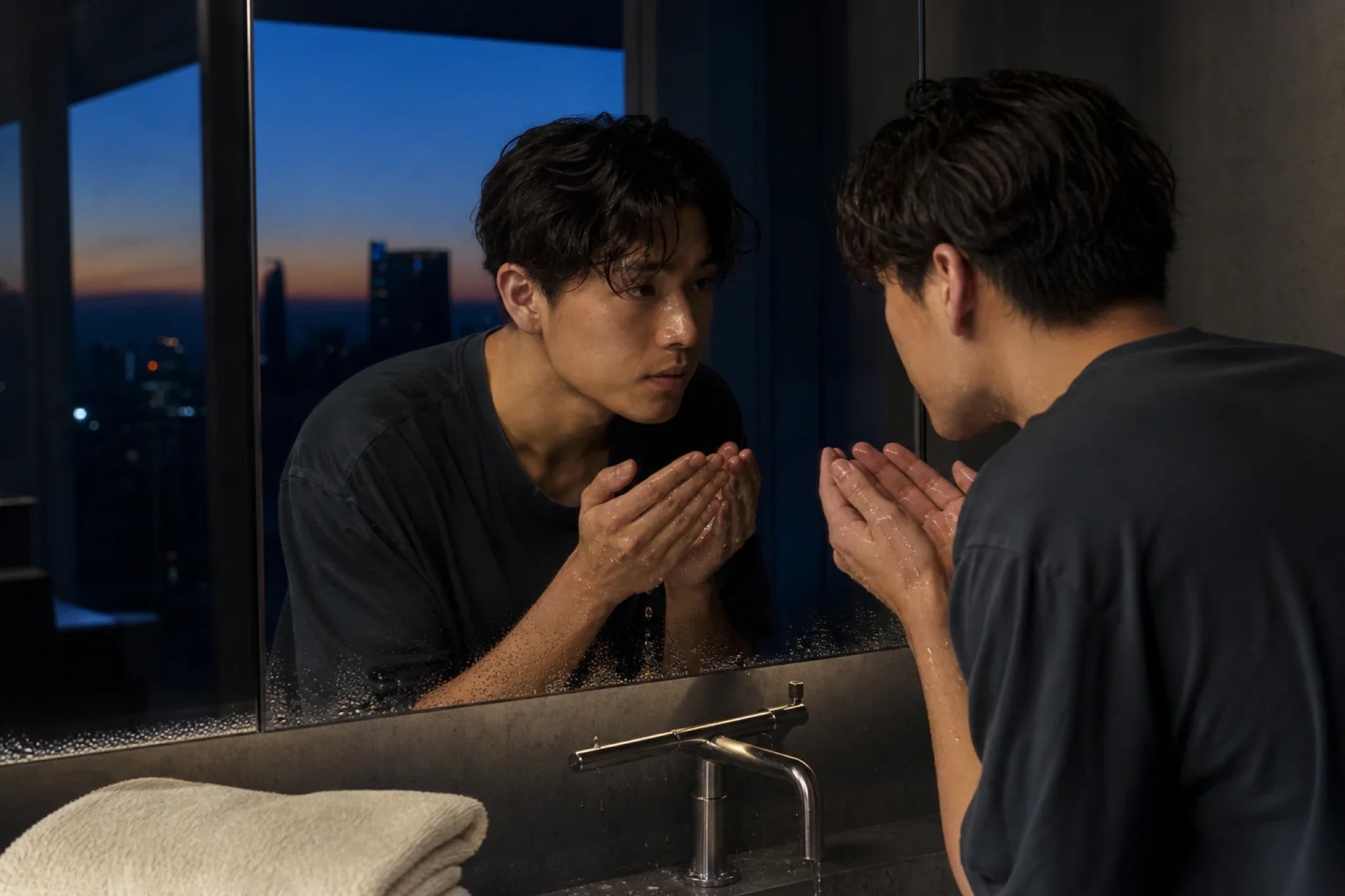
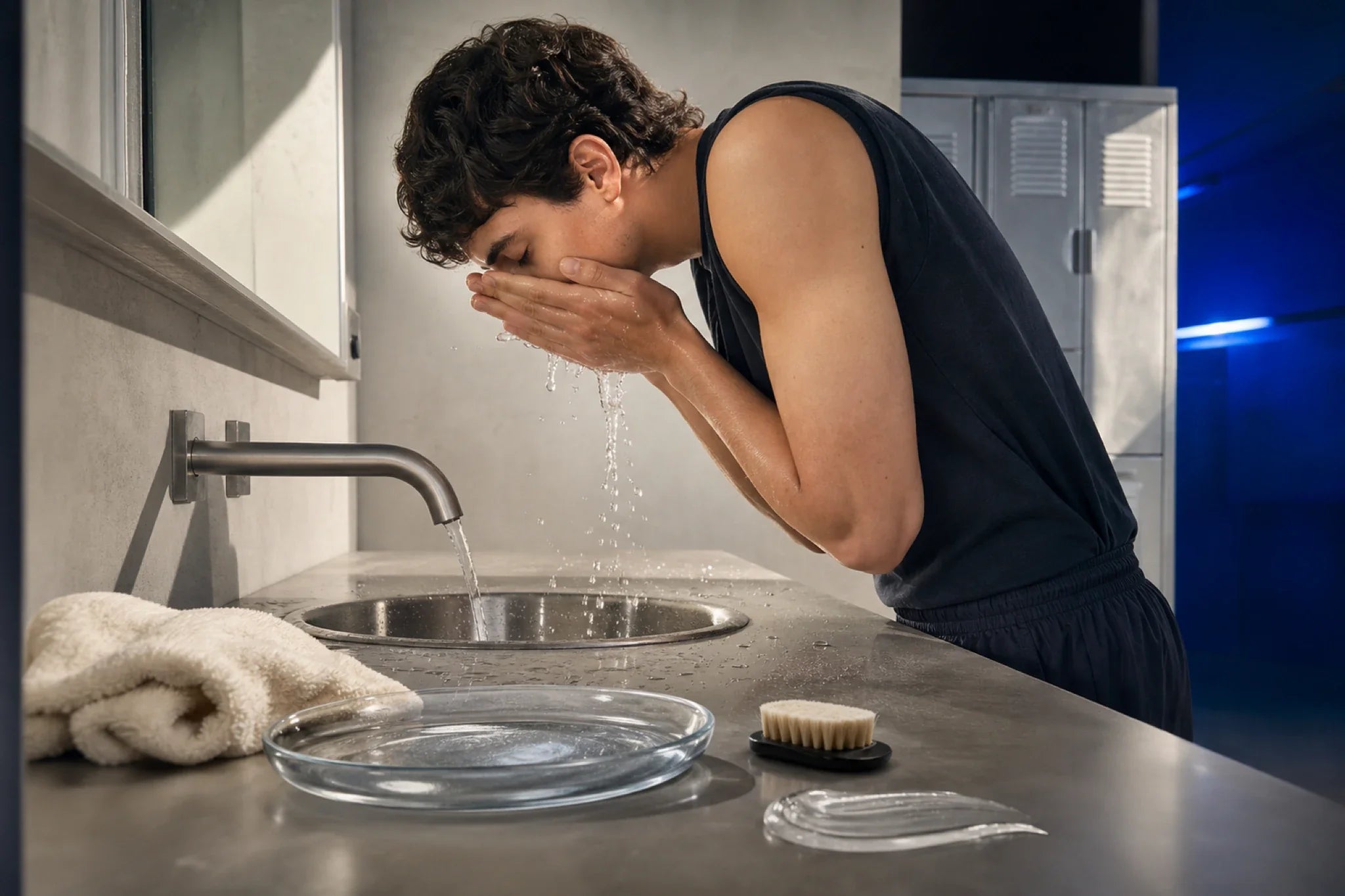
Cleanser / face wash. Healthy skin surface sits at pH 4.5–5.5 — the "acid mantle" — which supports barrier enzymes and keeps opportunistic bacteria down. True soap is saponified fat and lands at pH 9–10, which raises skin pH for hours and strips intercellular lipids. Synthetic detergents ("syndets") can be formulated to skin pH and are measurably gentler. Cleanse twice a day at most, with lukewarm water, and if your skin feels tight and squeaky afterwards, your cleanser is too strong.
Toner — optional. Toner exists for a historical reason that no longer applies: it was an alcohol-based astringent that removed soap scum left by alkaline soap and hard water. Modern versions are a thin humectant layer applied to damp skin. Pleasant. Not a required step. Any routine that calls a toner essential is selling one.
Moisturizer. Three ingredient classes, and a good product has all three:
- Humectants pull water in — glycerin (the most-studied and cheapest), hyaluronic acid, urea, panthenol.
- Emollients fill the gaps between cells — squalane, fatty alcohols, ceramides.
- Occlusives stop water leaving — petrolatum reduces transepidermal water loss by over 98%, which nothing else matches.
Sunscreen. This is the one with the strongest evidence of anything in cosmetic dermatology. In the Nambour trial (Hughes et al., Annals of Internal Medicine, 2013), adults randomized to daily sunscreen showed 24% less skin aging over four and a half years than the discretionary-use group. Broad spectrum, SPF 30+, roughly a quarter teaspoon for a face, reapplied every two hours outdoors.
That is the whole foundation. Everything after this is optimization, and optimization on a broken foundation does nothing.
2.2 Pores, blackheads and clogged pores
A pore is the opening of a hair follicle with its sebaceous gland. Its size is set by genetics, sebum output, and dermal elasticity — which is why they look larger with age as the supporting collagen slackens.
Pores have no muscles. They do not open and they do not close. Steam does not open them; cold water does not close them. What steam does is soften the keratin plug, which makes extraction easier — a real effect with a wrong explanation.
Blackheads are open comedones: a plug of keratin and sebum with an open surface. The dark color is oxidized melanin plus oxidized lipids — it is not trapped dirt, which is why scrubbing harder achieves nothing except inflammation. Closed comedones (whiteheads) are the same plug under an intact surface.
What actually clears clogged pores:
- Retinoids — the single most effective category. They normalize how follicular cells shed, which stops plugs forming. Adapalene 0.1% is available over the counter in many markets.
- Salicylic acid 0.5–2% — a beta hydroxy acid, oil-soluble, so it gets into the pore where water-soluble acids can't.
- Niacinamide 4% — reduces sebum output and apparent pore size over 8–12 weeks.
- Benzoyl peroxide for inflammatory lesions.
Pore strips pull off the top of the plug. It's cosmetic, it refills within weeks, and repeated use irritates. Skin care tools — metal comedone extractors, silicone brushes, dermaplaning blades, ice rollers — are mostly fine on non-inflamed skin and mostly a bad idea on inflamed skin, where the outcome is scarring and pigmentation rather than clearance.
2.3 How to exfoliate skin without wrecking the barrier
Exfoliation removes dead corneocytes faster than desquamation does on its own. Done right, it is the fastest route to visible smoothness. Done wrong, it is the single most common cause of the "my skin suddenly reacts to everything" spiral.
- Chemical, AHA: glycolic (smallest molecule, deepest, most irritating), lactic (gentler, also humectant), mandelic (largest, slowest, good for sensitive and for deeper phototypes).
- Chemical, BHA: salicylic acid, oil-soluble, best for oily and congested skin.
- Chemical, PHA: gluconolactone, lactobionic acid — large molecules, very gentle.
- Physical: a soft washcloth is fine. Ground shells and fruit pits have irregular edges and are worth avoiding on the face.
- Enzymatic: papain, bromelain — mild.
To exfoliate sensibly: start once or twice a week, at night, on dry-not-damp skin, and never in the same session as a retinoid when you're starting out. Signs you've gone too far: water stings, skin looks shiny (that's inflammation, not oil), products that were fine now burn, and small bumps appear. The fix is nothing but a bland moisturizer for two weeks.
2.4 What a face mask does
A sheet face mask occludes the skin for 15–20 minutes, which raises hydration in the stratum corneum and temporarily plumps fine lines. The effect is real and lasts hours, not days. A clay mask absorbs surface sebum. A mask is a nice thing you do; it is not a treatment step and it will not substitute for the core four.
2.5 Acne tips that hold up
Acne has four drivers, all at once: excess sebum (androgen-driven), abnormal shedding inside the follicle, Cutibacterium acnes proliferation, and inflammation. Two things follow immediately: acne is not caused by being dirty, and it is not contagious.
The evidence-based over-the-counter stack for clear skin:
- Gentle cleanser, twice daily.
- Adapalene 0.1% at night — pea-sized amount for the whole face.
- Benzoyl peroxide 2.5% in the morning or on alternate nights. The classic Mills & Kligman work showed 2.5% is as effective as 5% and 10% with markedly less irritation. It bleaches towels and pillowcases — use white ones.
- A non-comedogenic moisturizer (the term is unregulated, so judge by response).
- Sunscreen, because both actives increase photosensitivity.
Then wait twelve weeks before judging it. Weeks 2–4 often look worse — retinoids accelerate existing microcomedones to the surface. That is different from a reaction, which shows up as burning, swelling and rash rather than spots.
Chin and jawline acne — the "U-zone" pattern — tracks hormonal fluctuation more than anything you're applying. Persistent deep nodules along the jaw and chin in an adult, especially with irregular cycles or excess hair growth, is worth a doctor's appointment rather than a stronger scrub.
Acne mechanica is the most back-to-school-specific of all acne tips: pressure, friction, heat and occlusion produce breakouts exactly where the gear sits. Backpack straps across the shoulders and upper back. Chin straps. Helmets across the forehead. A phone screen against the cheek. Damp sports kit worn twice. The fix is mechanical: a clean shirt under the straps, a shower straight after practice, and never re-wearing damp kit.
Picking causes scars. A hydrocolloid patch absorbs exudate, flattens a lesion faster, and — mostly — physically stops your fingers.
Diet has a smaller role than the internet claims and a larger one than dermatology used to admit. The best evidence is for glycemic load: a randomized controlled trial (Smith et al., American Journal of Clinical Nutrition, 2007) found improvement on a low-glycemic-load diet. Skim milk shows a consistent observational association. Chocolate specifically: weak.
Stress is real too — exam periods correlate with acne severity in students (Chiu et al., Archives of Dermatology, 2003), which is exactly the population reading this.
2.6 Glass skin, korean skin care, and what actually transfers
Glass skin is the same optical principle as section 1.1, taken to its limit: a surface so smooth and so saturated with water that reflection is nearly mirror-like. The layering method behind it — essence, serum, emulsion, cream — is humectant layering finished with an occlusive seal. Real mechanism, no magic, and it works best on skin that isn't inflamed to begin with.
What genuinely transfers from korean skin care:
- Daily sunscreen as a cultural default rather than a beach product.
- Gentle, low-pH cleansing.
- Double cleansing at night (oil or balm first, then a gentle face wash) when you wear makeup or heavy sunscreen.
- Consistency over intensity.
What doesn't: ten steps for the sake of ten steps. Every additional product is additional preservative and fragrance exposure, and it makes it impossible to identify what caused a reaction.
The same questions get asked in every language — косметика, cosmetics, Kosmetik, 화장품 — and the answers don't change with the alphabet, because the ingredients don't. There are no beauty secrets in the sense the phrase implies. Serious skin care means four proven actives used consistently for three months. That's it. That's the secret.
2.7 Anti aging: retinol, tretinoin, collagen
Around 80–90% of visible facial aging is photoaging — extrinsic, UV-driven — not chronological. UV exposure upregulates matrix metalloproteinases, which degrade collagen faster than fibroblasts replace it. Dermal collagen declines roughly 1% a year from the mid-twenties, faster after menopause.
Retinoids are the only topical category with decades of controlled evidence for wrinkles and photoaging:
- Retinol (over the counter) converts in skin: retinol → retinaldehyde → retinoic acid. Each conversion loses potency, which is why a 0.5% retinol is not equivalent to a 0.05% prescription product.
- Tretinoin is retinoic acid — no conversion needed, prescription-only in most countries, and the molecule behind the landmark photoaging trials (Weiss et al., JAMA, 1988). If you want the strongest evidence, tretinoin is it, and it comes with a doctor's visit and a slower ramp-up.
- Start twice a week, pea-sized, on dry skin, buffered with moisturizer, always with sunscreen. Retinoid dermatitis is irritation, not "detox".
- Avoid topical retinoids in pregnancy as a precaution; oral isotretinoin is absolutely contraindicated and requires strict pregnancy prevention.
Collagen, honestly:
- Topical collagen has a molecular weight around 300 kDa. It cannot cross the stratum corneum. It works as a film-forming humectant — which is a perfectly good moisturizer, just not "collagen replacement".
- Oral collagen peptides: multiple meta-analyses report small improvements in skin hydration and elasticity, but the studies are heterogeneous and frequently industry-funded. Reasonable verdict: possible small benefit, not a substitute for sunscreen and retinoids.
Vitamin C (L-ascorbic acid, 10–20%, formulated below pH 3.5) is an antioxidant and a required cofactor for collagen synthesis; it oxidizes readily, so opaque airless packaging matters more than the number on the front.
The benefits of a good anti aging routine, ranked by effect size: don't smoke, wear sunscreen daily, use a retinoid, sleep, eat enough protein. Everything else is a rounding error.
On price: the shelf at a sephora skin care counter and a catalogue from avon can contain the same actives at wildly different prices. Retinol is retinol. What you're paying for at the top end is formulation stability, packaging, concentration accuracy and texture — all real, none of them transformative. A well-formulated $12 moisturizer beats a $120 one you use twice a month.
2.8 Makeup, skin tint, and taking it off
Makeup tips that are actually about skin health rather than technique:
- A skin tint is sheer pigment in a hydrating base. It's a good option when the goal is a glow rather than coverage, because it doesn't occlude the way a full-coverage foundation does. If it contains SPF, don't count on it — you'd need about a quarter teaspoon on the face to get the labelled protection, which nobody applies in a tint.
- "Non-comedogenic" is not a regulated claim anywhere. Comedogenicity testing was historically done on rabbit ears. Judge by what your skin does over four weeks.
- Wash brushes and sponges weekly. Damp sponges grow bacteria and fungi readily, and there's published work finding Staphylococcus on the majority of used beauty blenders.
- Never share eye or lip products. Conjunctivitis and cold sores travel this way.
- Sleeping in makeup combines occlusion, oxidized sebum and residual pigment. It doesn't "poison" your skin, but it reliably produces comedones and irritation.
Removal, in order: an oil or balm cleanser (or micellar water, where micelles surround and lift oily residue), then a gentle face wash. That's the double cleanse. A dedicated make up remover is optional if your first cleanse is oil-based — the exception being waterproof mascara, which needs an oil-based or bi-phase remover. Rubbing at lashes with a dry cotton pad causes lash loss and irritation around the eye; press, hold for twenty seconds, then wipe.
2.9 Clean beauty, natural skin care, homemade skin care
Clean beauty has no legal definition in any major market. It is a marketing category, and "chemical-free" is not a thing that can exist — water is a chemical.
Natural is not the same as safe. Essential oils are among the most frequent contact allergens once their terpenes (limonene, linalool, citral) oxidize on exposure to air. Poison ivy is natural. Good natural skin care means well-formulated products that happen to use plant-derived ingredients, tested and preserved properly — not products that avoid preservatives.
Homemade skin care is where people get hurt:
- No preservative system means bacterial and fungal growth within days in anything containing water.
- Baking soda sits around pH 9 and damages the barrier.
- Lemon juice is pH ~2 and contains furocoumarins — psoralens that photosensitize skin. Lemon plus sun produces phytophotodermatitis, a genuinely blistering chemical burn that leaves brown marks for months.
- Toothpaste on a spot is an irritant, not a treatment.
The DIY that is actually fine: colloidal oatmeal in a bath, plain petrolatum, and a cold spoon on a puffy eye.
On regulation: the EU restricts or bans well over 1,500 substances in cosmetics; the US expanded FDA authority with MoCRA in 2022. Neither makes "clean" mean anything.
Part 3 — Body care
Face skin is thinner, has more sebaceous glands and gets far more attention. Body skin is thicker, drier, has fewer glands on the limbs, and takes most of the abuse. A body care routine is four things: cleanse gently, moisturize on damp skin, exfoliate chemically, and protect what's exposed.
3.1 The shower routine
The biggest single variable in bath and body care is water temperature and time. Hot water and long showers dissolve intercellular lipids and drive water loss afterwards. Lukewarm, under ten minutes.
Soap vs. body wash. These are two different chemistries hiding behind one word. True soap is saponified fat and lands at pH 9–10. A syndet bar or body wash can be formulated at skin pH. This is why a "beauty bar" — Dove's, for example, is a syndet rather than true soap — behaves so differently from a traditional soap bar on dry skin.
Soap making, since people ask: fats plus lye (sodium hydroxide for bars, potassium hydroxide for liquid) undergo saponification. Superfatting — leaving unreacted oils in the bar — makes it less stripping, but it does not lower the pH. Handmade soap is a genuinely satisfying craft and a genuinely alkaline cleanser. If you have dry body skin or eczema, use it on your hands and something else everywhere else.
The three-minute rule. Apply body lotion within about three minutes of towelling off, on skin that is still damp. This "soak and smear" approach traps the water the shower just put in and measurably outperforms moisturizing dry skin later.
Loofahs and shower puffs stay damp and grow bacteria. Dry them outside the shower or replace them often — a basic hygiene point that gets skipped.
3.2 Lotion, cream, oil — what the difference actually is
- Lotion: high water content, light, absorbs fast, best for large areas and humid weather.
- Body cream: higher lipid fraction, better for genuinely dry skin, winter, and anywhere that cracks. A body cream with urea or ceramides is a treatment, not just a comfort.
- Ointment/balm: mostly occlusive, for heels, elbows, knuckles.
- Body oil: contains no water, so on its own it does not hydrate — it slows water loss and improves feel. Apply over damp skin or over a lotion, never onto dry skin expecting hydration.
Which oil, if you use one:
- Squalane — stable, light, non-comedogenic, the safest default.
- Jojoba — technically a wax ester, structurally close to human sebum.
- Sunflower — high in linoleic acid, shown to support barrier function.
- Olive — high in oleic acid, which disrupts the barrier in studies. Avoid on infants and on eczema-prone skin, whatever the kitchen says.
- Coconut — antimicrobial and effective on limbs; comedogenic on the face for many people.
- Mineral oil — inert, one of the most effective occlusives, and not comedogenic in modern testing despite its reputation.
You do not need many body care products: a gentle wash, a moisturizer, one chemical exfoliant, and sunscreen for whatever your clothes don't cover. Oils are optional.
3.3 Bumpy, rough and uneven body skin
- Keratosis pilaris — the rough "chicken skin" on upper arms and thighs. It's follicular hyperkeratosis, it's genetic, it's extremely common in teenagers, and it is not dirt. It responds to urea 10–20%, ammonium lactate 12%, or salicylic acid — used consistently. Scrubbing makes it redder without making it smoother.
- Body acne vs. folliculitis. Uniform itchy pustules on the chest, back and shoulders that flare after sweating are often Malassezia folliculitis, which is a yeast and responds to antifungal washes — not to benzoyl peroxide. If your "body acne" itches and looks identical lesion to lesion, that's the clue.
- Strawberry legs — dilated follicles with trapped keratin and hair, made obvious by shaving. Sharp blade, shave with slip, moisturize after, and use a lactic or salicylic acid lotion twice a week.
A workable body skin care routine: gentle cleanser daily; acid lotion two or three nights a week; moisturizer every day; SPF on anything the uniform doesn't cover. That's all body skin care requires.
3.4 Hands, and school-specific hygiene
Frequent handwashing produces irritant hand dermatitis, which is why alcohol gel — counterintuitively — is less damaging to skin than repeated soap-and-water, as well as being faster. Moisturize hands after either.
Hygiene tips that prevent actual skin disease, as opposed to the ones that just sound clean:
- Don't share towels, razors or hairbrushes — tinea, impetigo and molluscum all travel this way.
- Wear flip-flops in communal showers: tinea pedis and plantar warts are floor-borne.
- Change pillowcases weekly.
- Never re-wear damp gym kit.
- Clean your phone screen. It spends the day on desks and the evening on your cheek.
Part 4 — Smell
4.1 Why body odor happens (it isn't sweat)
Eccrine sweat is about 99% water and essentially odorless. Apocrine glands — concentrated in the armpits and groin, and only active after puberty, which is why this becomes a topic at exactly school age — secrete a lipid- and protein-rich fluid that is also odorless when it emerges. The smell is made afterwards, by skin bacteria: Staphylococcus hominis and Corynebacterium species metabolize those secretions into thioalcohols and short-chain fatty acids. The odor is a bacterial metabolite, not a hygiene failure.
That gives you two different product categories that people constantly confuse:
- Deodorant targets the bacteria and the odor — antimicrobials, pH modifiers, absorbents, fragrance. It does not reduce sweat.
- Antiperspirant uses aluminum salts that form a temporary gel plug in the sweat duct, reducing volume. In the US, "antiperspirant" is a regulated over-the-counter drug term; "deodorant" is a cosmetic term. Read the front panel — most drugstore lines, dove deodorant included, sell both under near-identical packaging.
On aluminum: both the American Cancer Society and the National Cancer Institute state the evidence does not support a link between antiperspirants and breast cancer, and the Alzheimer's claim is likewise unsupported by current evidence.
Natural deodorant contains no aluminum, so by definition it does not reduce sweat — it manages odor. Baking-soda formulas are the common failure point: sodium bicarbonate sits near pH 9 and is a frequent cause of underarm irritant dermatitis (the red, itchy, sometimes darkened patch people mistake for a "detox phase"). Magnesium hydroxide and zinc ricinoleate versions are much gentler. Expect to reapply.
One genuinely useful technique: apply antiperspirant at night, to dry skin. Duct plugs form better during low sweat output overnight, and they survive the morning shower. Applying it to a damp underarm after a hot shower is close to the worst case.
A mini deodorant is the highest-value item in a school bag — it fits, it solves a real mid-day problem, and the full-size one can live at home with the rest of your hygiene products.
4.2 Fragrance, body mist, perfume
The concentration ladder explains almost every complaint people have about how long something lasts:
| Category | Aromatic oil | Typical wear |
|---|---|---|
| Parfum / extrait | 20–30% | 6–8h+ |
| Eau de parfum | 15–20% | 4–6h |
| Eau de toilette | 5–15% | 2–4h |
| Eau de cologne | 2–4% | 1–2h |
| Body mist | 1–3% | ~1h |
A body mist that fades in an hour isn't a bad product; it's a 2% product. A perfume that lasts all day is a 20% product. You are buying oil concentration.
Scent evaporates by volatility: top notes (citrus, light greens) go in 15 minutes; heart notes carry the middle; base notes — vanilla, musks, woods, ambers — are heavy molecules that last. That is exactly why a vanilla body mist is the school-bag default: vanillin is a base note, so even at 2% it hangs around, and it reads as warm and non-confrontational in a shared classroom.
Practical rules:
- Spray onto clothes and hair rather than freshly shaved or broken skin. Alcohol on a just-shaved underarm stings for a physical reason.
- Fragrance mix I and II are consistently among the top allergens in patch-testing series. If your skin reacts, look for "fragrance-free" — not "unscented", which often means a masking fragrance was added.
- Citrus and bergamot oils on skin plus sun equals phytophotodermatitis. Don't spray perfume on your neck and chest before a day outdoors.
- Moisturize first. Dry skin loses scent fastest, so unscented lotion under a mist genuinely extends it.
- One spray. Classrooms are shared air, and some classmates have asthma or a fragrance allergy.
To smell good without relying on fragrance at all: clean clothes that were dried promptly (that damp-towel smell is bacterial too), a syndet body wash, dealing with the cause rather than layering scents over it. If someone smells strongly of body spray but not of clean laundry, the laundry is the actual problem.
There's a reason scent memory is so strong: olfactory input reaches the amygdala and hippocampus more directly than any other sense, which is how one body mist becomes permanently "the smell of ninth grade".
Part 5 — The adjacent stuff
5.1 Tanning and self tan
There is no safe UV tan. A tan is the visible result of a DNA damage response — melanin production increases because damage occurred. Sunbeds are classified by the IARC as Group 1 carcinogens, alongside tobacco, and meta-analyses put the melanoma risk increase from use before age 35 in the region of 59–75%. Tanning is the one item on this whole list with a genuinely serious downside.
Self tan is chemistry, not damage: dihydroxyacetone (DHA) reacts with amino acids in the stratum corneum in a Maillard reaction, producing brown melanoidins. Because it only colors dead cells, it fades as they shed, over roughly five to seven days.
To make it look good: exfoliate 24 hours before rather than immediately before; moisturize knees, elbows, ankles and knuckles so they don't grab; apply with a mitt; wait eight hours before showering; and understand that self tan provides essentially no meaningful UV protection. Wear sunscreen on top.
5.2 Hair, and the skin underneath it
Hairstyles affect skin far more than people expect, and the mechanisms are well documented.
Pomade acne — described in the dermatology literature since Plewig and Kligman's work — is closed comedones along the forehead, temples and hairline caused by heavy oils and waxes in hair product. It is extremely common in the combination of a fresh haircut for men plus daily styling product, and it's frequently misdiagnosed as ordinary acne and treated with harsher facial products that don't touch the cause.
Black color hair spray for styling men — the temporary root-touch-up and hairline-thickening sprays — deposits pigment and film-formers exactly where sebaceous density is highest. If you use one: shield the skin with a card while spraying, cleanse the hairline properly at night, and if you're breaking out in precisely the sprayed band, stop for two weeks. That band is the diagnosis.
Braids for men, cornrows, tight ponytails, buns and any style with sustained tension cause traction alopecia: repeated pulling inflames the follicle, and over years the damage becomes scarring and permanent. Early warning signs are tenderness after styling, small bumps along the hairline, and short broken hairs at the margin. Keep tension loose, take breaks between protective styles, and don't braid hair that is wet and swollen.
Dandruff and seborrheic dermatitis are driven by Malassezia yeast, not dryness. Ketoconazole, zinc pyrithione or selenium sulfide shampoo, left on for three to five minutes, is the treatment — and the same yeast causes the flaky redness in eyebrows and around the nose that people try to fix with moisturizer.
5.3 Tattooed skin
A tattoo is a controlled wound with pigment deposited in the dermis. Surface healing takes two to three weeks; deeper remodeling continues for months.
Aftercare that matches the evidence: wash gently twice a day, apply a thin layer of a petrolatum-based ointment (thick layers macerate the skin and slow healing), no soaking, no swimming, no gym for the first days, and never pick a scab — that's how ink comes out with it.
Once healed, sun is the main enemy. UV degrades pigment particles and drives the macrophage turnover that blurs lines. Daily SPF 30+ on a visible tattoo is the single biggest determinant of how it looks in ten years.
Placement changes the aftercare:
- Hand tattoos for guys fade fastest of any placement — high epidermal turnover, constant washing, constant sun, constant abrasion. Expect touch-ups and treat SPF as non-negotiable.
- A neck tattoo and a forearm tattoo men sleeve are both permanently sun-exposed year round. These are the placements where daily sunscreen genuinely pays for itself.
- A shoulder tattoo men most often choose sits under a shirt for nine months of the year and then gets burned on the first beach day — that single burn does disproportionate damage.
- Leg tattoo men placements deal with shaving and friction from denim. Shave around fresh work, not over it, and moisturize the area daily once healed; dry skin over a tattoo looks faded even when the ink is fine.
Two more: don't use retinoids, acids or scrubs over a healing tattoo, and red pigment is the most common cause of delayed hypersensitivity reactions — a raised, itchy area appearing months or years later inside the red sections warrants a dermatologist, not a pharmacy cream.
5.4 What's in the lunchbox
Diet does not cause acne, but glycemic load has better evidence than any other dietary factor, and the practical version is unexciting: build meals around protein, fiber and water-rich vegetables so glucose doesn't spike.
Which is where the most-searched lunch recipes turn out to be surprisingly defensible:
- melonen feta salat rezept — melon and feta salad. Water-rich fruit, with salt, fat and protein alongside it to blunt the glycemic response. Five minutes, travels well, and it's one of the better options for a hot September.
- nudelsalat rezept — pasta salad. The glycemic load depends entirely on execution. Cook the pasta al dente and cool it (cooling forms resistant starch, which lowers the glucose response), then make it at least half vegetables plus a protein. A pasta salad that is pasta and mayonnaise is a glucose spike with parsley on top.
- eingelegte gurken and the gurken einlegen rezept everyone looks up in August — pickled cucumbers. Near-zero glycemic load, genuinely satisfying, and properly lacto-fermented versions carry live cultures. Two caveats: quick-pickled vinegar versions contain no live cultures at all, and the sodium in a decent portion is not trivial.
On water: there is no good evidence that drinking beyond normal needs produces glowing skin. But dehydration does show up in skin. Hydration is a floor to stand on, not a lever to pull.
Health tips that measurably change skin: sleep 8–10 hours (the actual adolescent requirement, not the aspirational one), don't smoke or vape — nicotine causes vasoconstriction and accelerates collagen breakdown, and it shows on the face within years — move daily, and manage the stress rather than chasing the flare it caused.
The most underrated of all health and beauty tips, and the one that separates people whose skin changes from people whose skin doesn't: consistency beats intensity. Four products used every single day beat fourteen used when you remember.
Part 6 — The back to school emergency kit
One small pouch that lives in your bag. Every item here earns its place by solving a problem that actually happens during a school day — this is the practical half of a glow up, and it does more for how you feel at 2pm than any serum does.
Face care
- Mini sunscreen stick — reapplication is the entire point of carrying it
- Three to five hydrocolloid patches
- A sachet or mini gentle cleanser
- Lip balm with SPF
- Blotting papers, not powder (powder over sebum makes comedones)
Body and hygiene
- Mini deodorant
- Unscented hand cream
- Alcohol gel
- Period products in an opaque pouch — carry them whether or not you menstruate, because someone will need one
- Plasters, including one blister plaster
- A spare pair of socks. Genuinely.
Repair
- Safety pins or a mini sewing kit
- Stain wipes
- A hair tie and two bobby pins
- A small comb or brush
- A folded pack of tissues
Optional
- A body mist, applied outdoors, one spray
- Painkillers only if your school's policy allows students to carry them — many require medication to be held by the nurse
Then label it. Put a name on the pouch — one you're comfortable hearing read out loud when it turns up at lost property.
Worth saying, because the two searches sit side by side in exactly the same feeds: people building an aesthetic online are usually also hunting for character names, oc names, and names with nicknames for handles and profiles. Use one of those for a public account and keep your legal name on the inside of the pouch, where only a teacher will ever read it. Your back to school emergency kit is for your bag; your real name is not for the internet.
Part 7 — Beauty treatments, beauty hacks, and what to ignore
7.1 Professional treatments
Beauty treatments skin care clinics offer, ranked by how much evidence sits behind them — all requiring a qualified practitioner, and most requiring you to be an adult or to have parental consent:
- A dermatologist appointment. The highest-value "treatment" on any list. Prescription retinoids, antibiotics, hormonal therapy and isotretinoin outperform every facial ever given.
- Superficial chemical peels (glycolic, salicylic, mandelic). Good evidence for texture and mild pigmentation. Needs a practitioner who understands your phototype — peels on deeper skin tones carry real hyperpigmentation risk in inexperienced hands.
- Professional extractions. Safer than your own fingers, by a wide margin.
- Microneedling, LED, lasers. Evidence varies enormously by device, setting and indication. Energy devices on deeper phototypes require specific expertise.
7.2 Popular beauty hacks, assessed
The beauty hacks that circulate every August, with verdicts:
| Hack | Verdict |
|---|---|
| Slugging (petrolatum as the last night step) | Works. Excellent occlusive. Skip it if you're acne-prone on the face. |
| Ice rolling / cold spoons | Works, briefly. Vasoconstriction reduces puffiness for an hour. |
| Rice water | Weak. Some inositol data, mostly anecdote. Harmless. |
| Green tea compress | Mild. Polyphenols are anti-inflammatory; the concentration on a wet teabag is low. |
| Toothpaste on a spot | No. Irritant. Use a hydrocolloid patch. |
| Lemon juice for dark marks | No, and it's dangerous. Phytophotodermatitis. |
| Baking soda scrub | No. pH 9 on a pH 5 surface. |
| Sunscreen only when it's sunny | No. UVA is constant through cloud and window glass. |
| DIY vitamin C from oranges | No. Wrong molecule, wrong pH, no stability. |
7.3 Ignore
- Anything that claims to shrink or close pores permanently
- "Chemical-free"
- Results promised in three days
- A twelve-step routine as a beginner
- Buying an entire set of new beauty products at once — introduce one active every two weeks, or you will never know what caused the reaction
7.4 The short version
Every list of beauty routine tips, skin care tips, skin tips and healthy skin tips ever written compresses to this:
Cleanse gently. Moisturize on damp skin. Wear sunscreen every day. Add a retinoid at night. Sleep. Eat like blood sugar matters. Don't pick. Give it twelve weeks.
That is the back to school glow up. It's unglamorous, it's cheap, it's supported by decades of controlled trials, and it works on every one of the skin types described above.
Further reading
- Hughes MCB et al. Sunscreen and prevention of skin aging: a randomized trial. Annals of Internal Medicine, 2013.
- Weiss JS et al. Topical tretinoin improves photoaged skin. JAMA, 1988.
- Mills OH, Kligman AM et al. Comparative benzoyl peroxide concentration studies.
- Smith RN et al. A low-glycemic-load diet improves symptoms in acne vulgaris. American Journal of Clinical Nutrition, 2007.
- Chiu A, Chon SY, Kimball AB. The response of skin disease to stress. Archives of Dermatology, 2003.
- American Academy of Dermatology — patient education on acne, sunscreen, and tattoo aftercare.
- National Cancer Institute — antiperspirants and breast cancer fact sheet.